

Is Bloating After Every Meal Actually Normal? What Your Gut Might Be Telling You
You have tried eating slower. You cut out gluten for six weeks. You take a probiotic every morning. You drink more water, eat more fibre, and avoid the foods that seem to make it worse.
And you still bloat after almost every meal.
This is not in your head. And it is not something you should just push through. Chronic bloating is your digestive system communicating that something is not working the way it should.
Here is what is most likely going on, and what actually tends to help when the usual advice has stopped working.
The Difference Between Normal Bloating and Chronic Bloating
Some bloating is a completely normal part of digestion. Gas is produced as food is broken down and fermented by gut bacteria. A little distension after a large meal is not a sign that anything is wrong.
But bloating that happens after most meals, that is consistent regardless of what you eat, that leaves you feeling heavy and uncomfortable for hours, is a different thing. That is not normal digestion. That is a sign the digestive process is not running efficiently.
What makes it chronic
Chronic bloating typically comes down to one or more of the following: food that is not being broken down properly before reaching the large intestine, gut bacteria that are out of balance and producing excessive gas, a colon that is not clearing effectively between meals, or a combination of all three.
When waste and gas sit in the colon longer than they should, pressure and discomfort become constant. It does not matter how clean your diet is if your gut is not moving efficiently.
Is It Normal to Feel Bloated After Every Meal?
Occasional bloating is normal. Bloating after every meal, or most meals, is not. When bloating is consistent and persistent regardless of what you eat, it usually signals sluggish gut motility, a gut bacteria imbalance, or poor clearance in the colon. These are addressable issues, not something to manage indefinitely.
Common Causes of Chronic Bloating
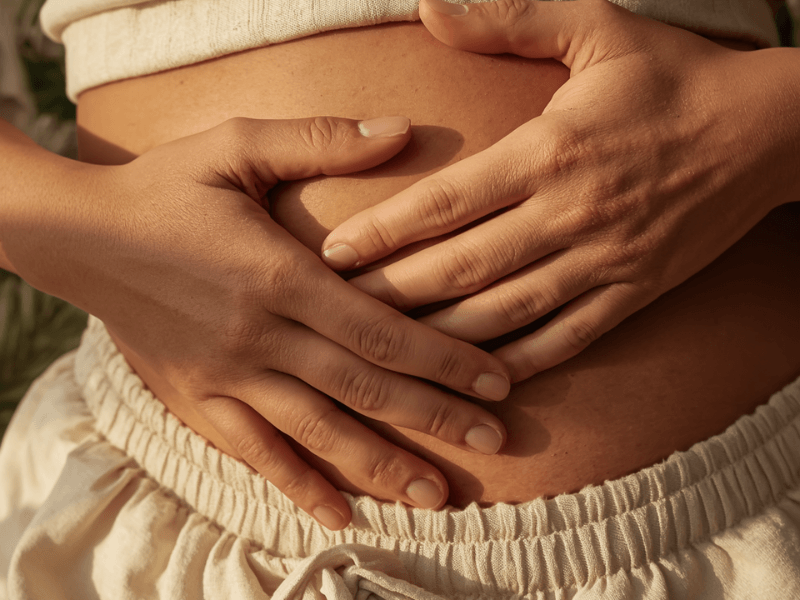
Sluggish gut motility
Gut motility refers to the speed at which things move through your digestive tract. When motility is slow, food and waste spend more time in the colon than they should. Bacteria have more time to ferment what is sitting there. Gas and pressure build up.
Motility is affected by hydration, stress levels, physical activity, sleep, and hormones. It can be sluggish even when we are eating well and doing everything else right.
Gut bacteria imbalance
The bacteria in your gut play a critical role in how food is processed and how gas is produced. When certain bacteria overpopulate, gas production increases significantly. Some people develop an overgrowth of bacteria in the small intestine that causes significant bloating even from foods that would normally be well tolerated.
Probiotics can help here, but they work best as part of a broader approach rather than a standalone fix.
Hormonal fluctuations in women
Progesterone has a relaxing effect on smooth muscle, including the muscles of the digestive tract. In the second half of the menstrual cycle, when progesterone rises, digestion naturally slows. Many women experience more bloating and constipation in the week before their period for this reason.
For women who are perimenopausal or menopausal, fluctuating hormones can affect the gut microbiome and digestive function over a longer timeframe.
Stress and the nervous system
The gut and the nervous system are directly connected. When your body is in a stress response, even a low-level background one, digestion is deprioritised. The muscles of the digestive tract slow down. Clearance becomes less efficient.
A lot of people dealing with chronic bloating are also managing sustained levels of stress. The connection between the two is physiological, not psychological.
Why Diet Changes Alone Often Do Not Fix It
Elimination diets have their place. If there is a true food intolerance driving your symptoms, identifying and removing that food will help. But a lot of people go through extensive elimination protocols, find nothing definitive, and still feel bloated most of the time.
That is usually because the issue is not primarily about what is going in. It is about how efficiently the gut is moving and clearing.
When the colon is holding onto waste, even a clean diet can produce significant bloating. The food is not the problem. The clearance is. This is the point where many people hit a wall.
What Actually Tends to Help
Addressing the nervous system
If chronic stress is part of your picture, addressing it directly makes a real difference. Sleep, nervous system regulation, and reducing the overall load on your body all support digestive function in ways that no supplement can fully replicate.
Supporting motility directly
Consistent movement, adequate magnesium, and good hydration support gut motility. These work as a foundation, not a fix. They need to be consistent over time.
Colon hydrotherapy
For those who have been dealing with chronic bloating and have not found lasting relief elsewhere, colon hydrotherapy is often the turning point.
The process introduces warm filtered water gently into the colon to assist with elimination. It is not extreme, and it is not a detox quick fix. It is a practical tool for clearing accumulated waste and helping the gut reset its motility patterns.
People who come to Glow Colonics often describe it as the thing that finally worked when nothing else did. Not because it is dramatic, but because it directly addresses the clearance problem that diet and supplements cannot always reach.
A series of sessions gives the gut the repetition it needs to start moving more consistently on its own.
When to See Your GP First
Most chronic bloating is a motility and clearance issue. But some symptoms warrant a conversation with your GP before exploring other options: blood in your stool, unexplained weight loss, bloating accompanied by persistent pain, or a sudden and significant change in your bowel habits.
If none of those apply and you are simply dealing with persistent, frustrating bloating that affects your daily life, the issue is very likely addressable.
Where to Start in Cairns
If you have been dealing with chronic bloating that has not shifted with dietary changes, Glow Colonics offers a calm, private, boutique environment to explore colon hydrotherapy.
The first step is always a conversation. We will talk through your symptoms honestly and give you a clear picture of whether this is likely to help. No pressure. Just practical guidance.
Done normalising the discomfort?
Book a session at Glow Colonics, Cairns' boutique colon hydrotherapy studio.
Interested? Start with a conversation.
Send a message and tell Steph a little about where you are and what you are looking for. She will get back to you personally and you can work out together whether coaching is the right next step.